

Master Skills Workshop with Patti Gauch and Gary Schmidt
A week to dive deep into your craft.
Patti Gauch and Gary Schmidt have been teaching this workshop together for years, and every year they bring new lessons, new prompts, and new exercises. Some of the most talented writers we know return year after year. Published books have come out of this event.
This is a week for children's and teen authors who are ready to dive deep into craft and take their writing to the next level. Patti brings decades of editing experience from her time at Philomel Books, where she worked with three Caldecott winners and a National Book Award winner. Gary brings two Newbery Honors and years of teaching at the MFA level. Between them, you’ll get an editor's eye and a novelist's instinct, both focussed on your manuscript.
The week is built around workshops, talks about craft, one-on-one editing and mentoring sessions, and readings, all at Caboose Farm.

Bringing Minor Characters to Life
Minor characters are not just props for your main character's story.
Every character in your book deserves a life of their own. Minor characters aren't just there to serve the protagonist. When they're fully realized, minor characters’ storylines add depth to your protagonist’s drama and to the manuscript as a whole.
In this seminar, Erin Dionne looks at how to breathe life into minor characters: what makes them well-rounded, how their storylines can strengthen your protagonist's, and how to build the kind of secondary character readers remember. You'll leave with concrete tips and tools for assessing and building your supporting cast.

You Should Take It Personally: Creating and raising internal stakes
The most important stakes are the personal ones.
Stakes keep readers turning the pages. But stakes are as varied as the stories that carry them. Maybe the entire galaxy is at risk of imploding. Maybe the farmer's market will be out of pears if your hero arrives late. Whether you're writing something plotty and exciting, quiet and tender, or narrative nonfiction, the most important stakes are the personal ones. External action creates plot, but emotional stakes are what connect readers to a story and keep them reading.
Evan Griffith is the author of award-winning middle-grade novels and picture book biographies, and a faculty member at the Vermont College of Fine Arts MFA. In this seminar, he'll show you how to identify your character's internal stakes, and how to raise them so your reader fundamentally cares and wants to read more.

Scene Structure: Key elements in the building blocks of your story
The scene is the basic building block of any story.
The scene is the basic building block of any story. But what makes a great one? Laurie Calkhoven will use mentor texts to walk through the key elements that go into writing great scenes: stage setup, characters and their motives, large and small actions, dialogue, and point of view, all working together toward a scene climax.
Laurie spent twenty years in children's publishing, including time as an executive editor at Scholastic, before writing more than fifty books of her own. Examples are drawn from popular works of middle grade and YA fiction, and you'll leave the workshop with a new scene.
Master Skills Intensive: From Mentor Texts to Your Manuscript
A focus on the elements.
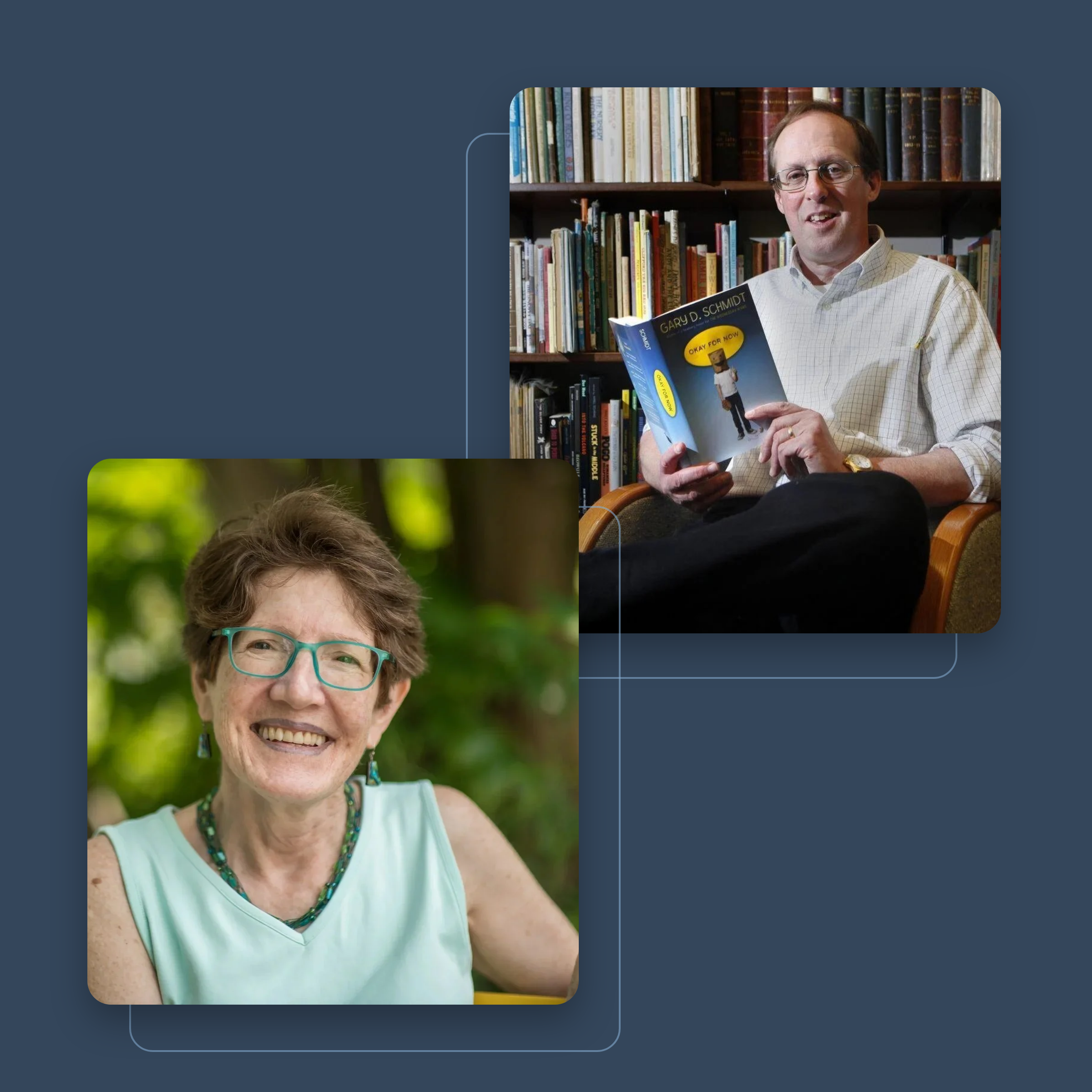
Gary D. Schmidt and Kathryn Erskine lead a three-month intensive for intermediate middle grade and young adult writers who want to study craft from inside the novels themselves. Each week the group reads one recent novel closely and looks at how its author handles a single element, from plot and character to point of view and setting, and every third week you bring your own pages to a small group for feedback. One week after the final class you’ll submit a twelve-page packet and receive extensive notes from one mentor and a short response from the other. You’ll come out making the craft choices in your own novel as deliberately as the authors you’ve been reading. The intensive is offered on a sliding scale so cost is less of a barrier to joining.

The Short Novel
Draft a complete short novel in seven months.
Gary D. Schmidt and Shelley Tanaka lead a seven-month workshop for experienced writers ready to draft a complete short novel, a manuscript of roughly 80 to 120 pages. You start from a premise, read assigned short novels as mentor texts, and draft your book in three packets that your mentor reads and responds to in one-on-one editorial feedback. New for 2027, the workshop adds optional group writing sessions and a bonus book read, building more community into the writing months. By the end of August you’ll have a finished draft and a working understanding of the short novel form, shaped by a mentor who has read your whole book. The Short Novel fills every year, so apply early.

Feeling It: Creating Emotional Depth in Your Novel
For writers that are ready to get their character’s emotions on the page.
Karen Krossing and Laura Shovan spend four weeks on creating emotional depth, the writing that makes a reader care about a character as much as you do. Most of us have gotten the note that a character just didn’t resonate, and it usually means we didn’t go far enough into what that character was feeling. Karen and Laura walk you through different ways to close that gap, whether that means connecting to your writer self, your characters, or your story ideas. You bring a chapter from a novel at any stage, work through exercises and side-writing between sessions, and submit ten pages for feedback from one of them. You’ll leave with a revised chapter and new techniques you can bring to any manuscript.

Building Your Author Brand With Newsletters
Everyone tells you to start one. Nobody tells you what to include.
You're an author. Maybe you're published, maybe not. Everyone says you need a newsletter, but almost nobody tells you what to write about or how often to send it. And what does a newsletter actually do for you? For your books? Where do you even begin??
Join Erin Dionne for an evening that covers it all: the benefits of a newsletter, how to think about content, which services are worth using, and how to get your newsletter off the ground. You'll leave with content ideas and a list of resources, the tools you need to get started.

Encounters of the Close Third Kind
First person isn't always the answer.
When writing a picture book or a novel, many writers choose first person as the surest way to bring readers close to the protagonist. But is it always the best choice? Most of us settle into one point of view early and then spend the rest of the draft managing its limitations instead of asking whether it was the right call. Close third can do things first person and regular third can't: deepen perspective, sharpen voice, and strengthen a manuscript.
Karen Boss is an acquiring editor at Charlesbridge and an enthusiast about close third person, and she teaches it in a way that's practical rather than theoretical. Session one is a craft lecture. Session two is a group conversation, designed for writers ready to geek out. If you want feedback on your own work, you can add a ten-page read with Karen.